
Your kid doesn’t need a logo. They need a customer.
Their first paying customer in thirty days. Less paperwork than you think. And the ninety days that decide whether it lasts.
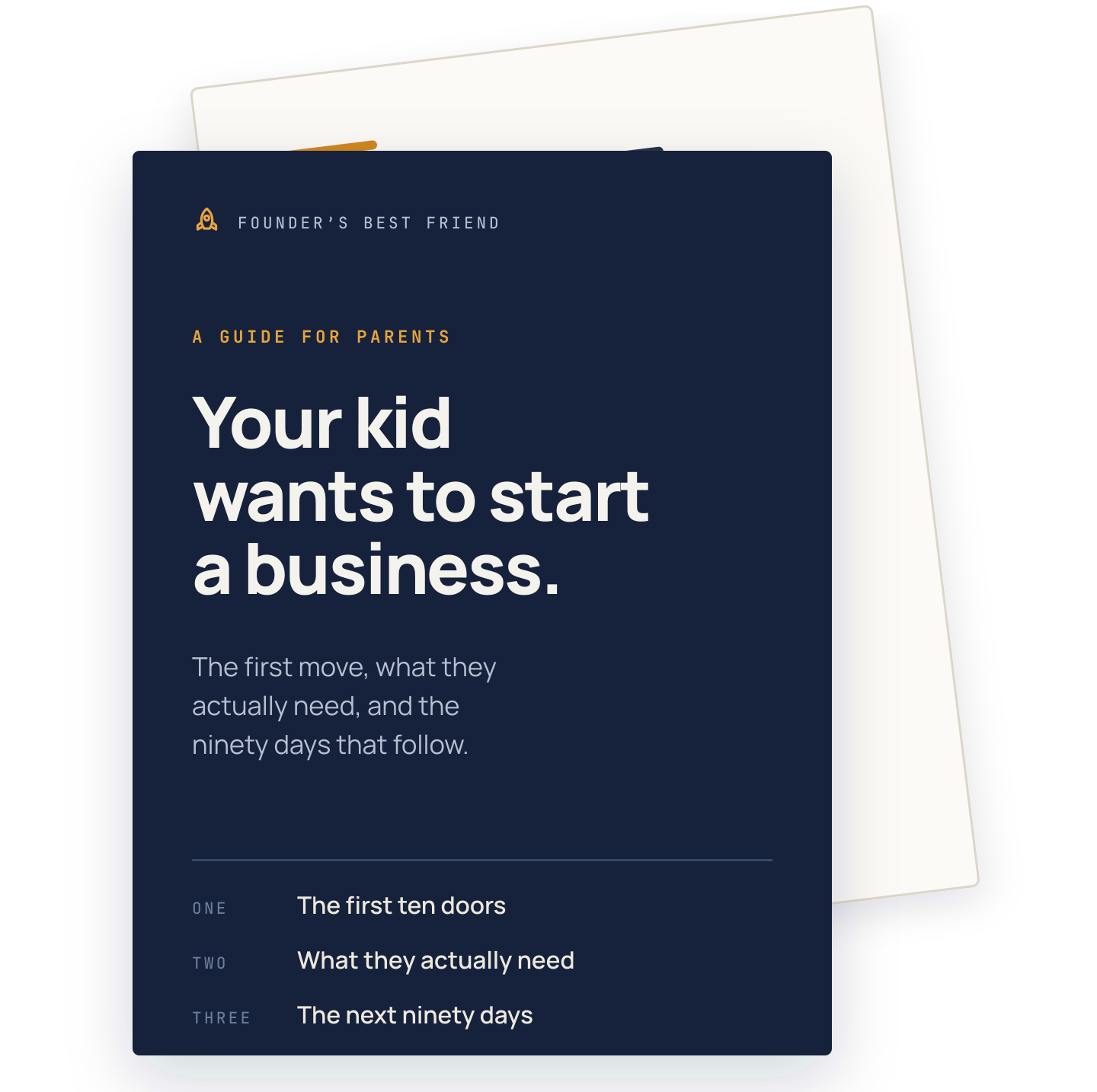
Three things you can use this week.
No fluff about mindset. A plan, an honest answer about paperwork, and a map of what comes next.
The first ten doors
A thirty-day plan to get one paying customer. What to do each week, what to listen for, and the six things to stop your kid from doing first.
What they actually need
Whether a minor needs an LLC, how bank accounts work before eighteen, and the one tax number to know. Usually it’s less than you think.
The next ninety days
Thirteen questions your kid will run into after the first sale, in the order they show up. This is where most kid businesses quietly stop.
My son started with a flyer.
He wanted to start a pressure washing business. The first thing he did was sit down with a friend to make a flyer. Then they talked about a business card. Then a logo.
I told him to close the laptop and go knock on doors.
Not because flyers are bad. Because he didn’t know yet whether one person on our street would say yes, or whether he’d even like the work once he did it.
Until he knew both of those, everything else was decoration.
A business is one clear thing: a person who will pay a price for a promise.
I spend my days helping adult founders answer those same kind of questions. It turns out the questions don’t change much between a fourteen-year-old with a pressure washer and a forty-five-year-old leaving a corporate job.
The stakes change. The questions don’t.
David Daniel, co-founder, Founder’s Best Friend

Thirteen questions. We name all of them.
Most kid businesses don’t fail. They fade, because nobody hands the kid the next question. Here are four of the thirteen.
What am I really selling? Not the task. The reason someone wants the task done.
What do I charge, and how? A one-time job and a monthly plan are different businesses built from the same work.
What do I do about the customer who is more trouble than the money is worth?
What did I learn about myself that I’ll still be using in ten years?
The other nine are in the guide.
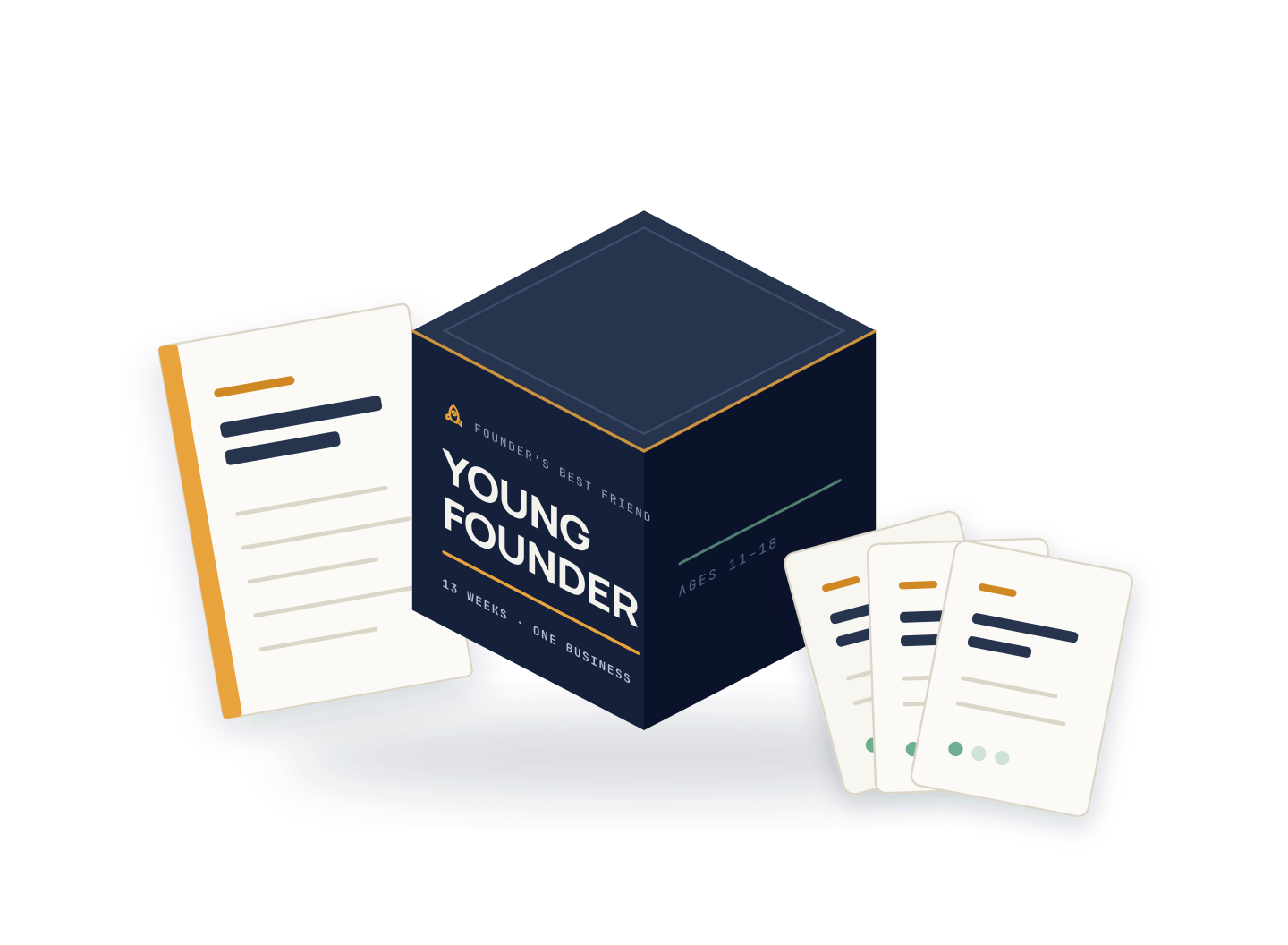
The Young Founder kit.
The guide names the thirteen questions. The kit walks your kid through all of them, one week at a time, with a real business at the end of it.
Pick one thing this week.
Have your kid write down who their customer is and what they’d charge. Then have them say it out loud, first to you and then to one stranger.
That’s the whole first step. The guide covers the rest.